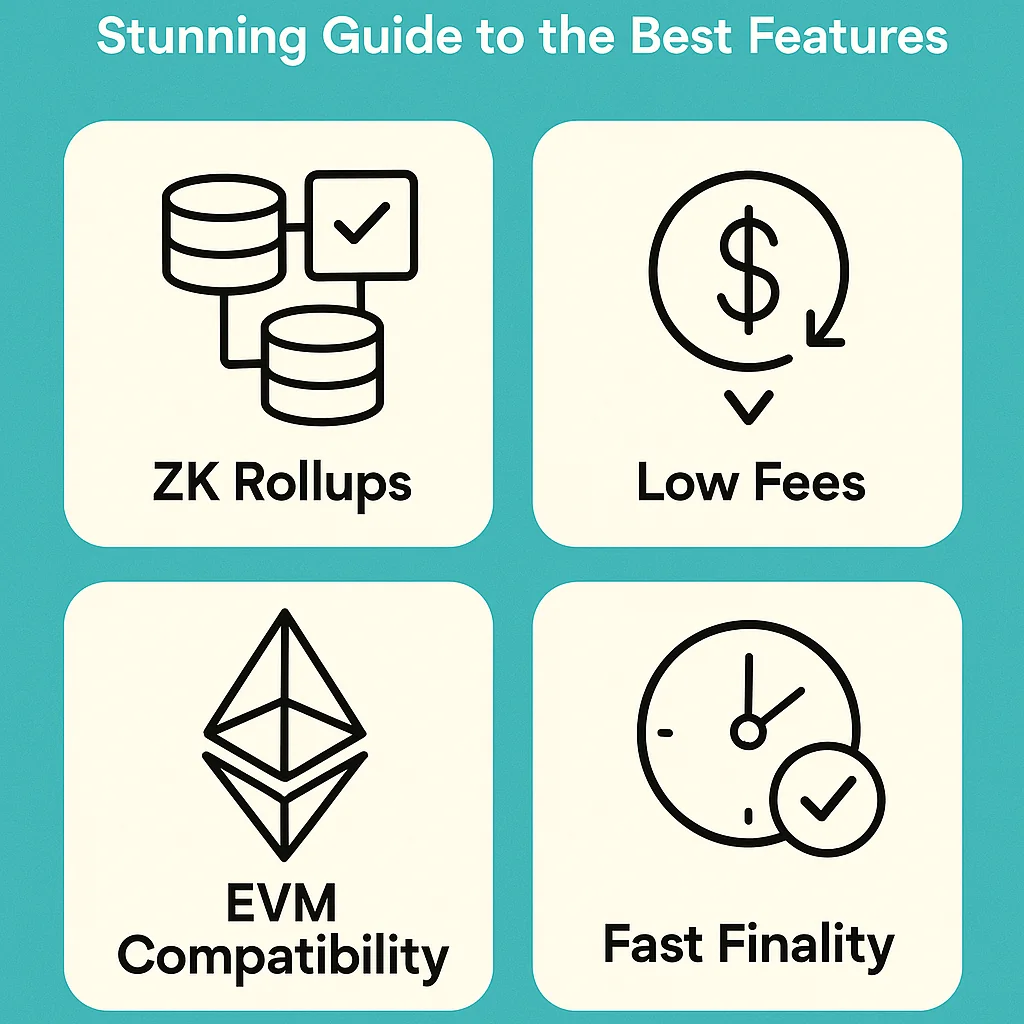
Linea Explained: Stunning Guide to the Best Features
In this article
Linea is a Layer 2 blockchain built on Ethereum that uses zero-knowledge proofs to offer cheaper and faster transactions. It aims to give users and developers the same experience as Ethereum, but with higher throughput and lower fees.
Linea is a zkEVM network. This means it is compatible with the Ethereum Virtual Machine (EVM) and can run most Ethereum smart contracts with few or no changes. It is developed by Consensys, the company behind MetaMask and Infura, so it connects closely with tools that many crypto users already trust.
How Linea Works in Simple Terms
Linea processes many transactions off the Ethereum mainnet, then bundles them together and sends proof back to Ethereum. This lets the chain keep Ethereum’s security while moving most of the heavy work off-chain.
Under the hood, Linea uses zero-knowledge proofs (specifically zkSNARKs) to prove that a batch of transactions is valid. The Ethereum mainnet verifies the proof rather than each transaction one by one. This reduces gas usage and increases throughput.
Key Components of Linea’s Architecture
Linea breaks its process into a few main parts. Each part handles one job in the chain, from collecting transactions to submitting proofs back to Ethereum.
| Component | Role |
|---|---|
| Sequencer | Orders transactions and creates blocks on Linea |
| Prover | Generates zero-knowledge proofs for batches of transactions |
| Verifier Contract | Runs on Ethereum to verify zk proofs and update state |
| Bridges | Move assets and messages between Ethereum and Linea |
| Nodes | Maintain Linea’s state and relay data to users and dApps |
Together, these components let Linea act as a fast side network that still anchors its security in Ethereum. Users interact with Linea much like they interact with Ethereum, often through the same wallets and interfaces.
What Makes Linea Different from Other Layer 2s?
Layer 2 scaling is a crowded space. Linea stands out through its zkEVM approach, its tight link to the Ethereum tool stack, and its focus on developer experience.
Instead of using optimistic rollups, Linea uses zero-knowledge proofs for finality. This changes withdrawal times, security assumptions, and the way users think about moving assets.
zkEVM vs Optimistic Rollups
Most early Ethereum Layer 2 networks used optimistic rollups, which assume transactions are valid unless someone proves fraud. Zero-knowledge systems work differently and rely on cryptographic proofs instead of fraud challenges.
- Users send transactions to the Layer 2 (Linea or an optimistic rollup).
- The Layer 2 orders, executes, and groups these transactions into batches.
- Optimistic rollups rely on a challenge window, while Linea uses zk proofs for instant validity.
- Final state commitments go to Ethereum, which acts as the ultimate settlement layer.
Because Linea uses zk proofs, it does not need long challenge periods. That can mean faster withdrawals in many cases and a cleaner security model based on math instead of game theory alone.
Benefits of Using Linea
Linea offers a mix of low fees, Ethereum-level security, and direct EVM compatibility. That combination appeals to both users and developers who want cheaper transactions without losing the Ethereum base layer.
Main Advantages
Several concrete benefits stand out when looking at Linea in daily use cases, such as DeFi trading or NFT minting.
- Lower Fees: Transactions on Linea usually cost a fraction of mainnet gas fees.
- Higher Throughput: The network can handle more transactions per second than Ethereum L1.
- Ethereum Security: Final proofs and state commitments live on Ethereum.
- Native MetaMask Support: Users can connect through a familiar interface with minimal setup.
- EVM Compatibility: Many existing smart contracts can be deployed with small or no changes.
For example, a user who pays $20 to swap tokens on Ethereum might pay under $1 on Linea at the same time of day. For active DeFi traders or NFT users, this difference adds up quickly.
The LINEA Token: What to Know
The native token of the network is commonly referred to as LINEA. It plays several roles across gas payments, governance, and economic alignment for the network.
Like many Layer 2 tokens, LINEA acts as the primary gas asset on the chain. Users pay fees in LINEA for transfers, swaps, and contract calls.
Typical Use Cases for the LINEA Token
The token gives participants a direct link to network activity, incentives, and potential governance rights, depending on the final token model and on-chain proposals.
- Paying transaction fees on the Linea network.
- Staking or delegating (where supported) to support network operations.
- Voting on governance proposals that shape protocol upgrades.
- Participating in incentive programs and ecosystem campaigns.
Token specifics such as supply, emission schedule, and detailed governance rules depend on the latest published documentation and on-chain governance changes, so users should always check up-to-date sources before making decisions.
What Can You Do on Linea?
Linea supports a growing ecosystem of decentralized applications. Many use cases mirror Ethereum mainnet but with lower cost, which changes how users behave and experiment.
For instance, users can test small trading strategies or NFT mints on Linea that would be too expensive on L1. Developers can run more frequent contract upgrades and experiments without burning large gas budgets.
Common Use Cases
Several categories already appear on Linea, often linked with incentives or integrations from the Consensys stack.
- DeFi: DEXs, lending markets, yield aggregators, and stablecoin protocols.
- NFTs and Gaming: Cheap minting, in-game assets, and digital collectibles.
- Payments: Fast, low-cost transfers for remittances and peer-to-peer payments.
- Infrastructure: Oracles, indexers, and cross-chain messaging tools.
- Identity and Social: On-chain reputations, profiles, and social graphs.
A simple micro-example: A game studio can mint thousands of in-game NFTs on Linea with minimal fees, then bridge high-value items to Ethereum mainnet for long-term storage or secondary sales.
How to Start Using Linea
Most users can start using Linea with a standard Ethereum wallet and some tokens. The process feels familiar if you already use other EVM chains or Layer 2 networks.
Step-by-Step: Connecting and Bridging
The basic flow is simple: connect a wallet, add the network, bridge funds, and start using dApps.
- Install or open MetaMask: Ensure you use the latest version or a similar EVM wallet.
- Add the Linea network: Use an official RPC configuration or a network list aggregator.
- Bridge assets from Ethereum: Send ETH or tokens through a supported bridge into Linea.
- Explore dApps: Visit DeFi, NFT, or gaming dApps that list Linea as a supported network.
- Manage gas and security: Keep a small buffer of LINEA or ETH (if used as gas) for fees and always verify contract addresses.
After this setup, you can interact with Linea apps in much the same way as Ethereum apps: sign transactions, approve tokens, and track your balances directly in your wallet or portfolio tracker.
Security and Risks
Linea inherits security from Ethereum but still introduces its own risk surface. Users should understand both the strengths and the open questions before shifting significant value onto any Layer 2.
Smart contract risk, bridge security, and proving system reliability all matter. Misconfigured contracts or bugs in the proof system can still cause issues, even if Ethereum acts as the final settlement layer.
Main Risk Areas to Watch
A short checklist helps keep risk in view while using Linea for DeFi or other activities that involve capital.
- Bridge Risk: Bridges are common attack targets; always use official or well-audited bridges.
- Smart Contract Bugs: dApps on Linea can still have vulnerabilities, even if audited.
- Protocol Upgrades: Early-stage systems often update fast, which can change assumptions.
- Centralization: Sequencer or prover control may be more centralized in early phases.
Practical steps include starting with small amounts, reading audits where available, following official communication channels, and using hardware wallets for larger balances.
Who Is Behind Linea?
Linea is developed by Consensys, a major Ethereum-focused company that builds infrastructure and applications. This background gives Linea deep links with tools such as MetaMask, Infura, and Truffle.
This connection can accelerate integration for developers. Many teams already familiar with Consensys tools can move to Linea with limited friction, which supports faster ecosystem expansion.
Partnerships and Ecosystem Growth
Linea collaborates with dApps, infrastructure providers, and cross-chain platforms to bring more activity onto the network. Ecosystem programs and grants often aim at DeFi, gaming, and infrastructure projects in early phases.
Users benefit from these partnerships through more liquidity, more choices among dApps, and campaigns such as quests or reward programs that encourage early use.
Future Outlook for Linea
Linea tries to position itself as a long-term Layer 2 hub built around zero-knowledge proofs and Ethereum compatibility. As zk technology improves, cost and speed gains could increase further.
Competition is strong, with several other zkEVM and optimistic Layer 2 networks also racing to attract users and developers. Linea’s edge lies in its zk architecture and deep integration with widely used Ethereum tooling.
What to Watch Next
A few signals can help users judge Linea’s long-term relevance in the broader Ethereum ecosystem.
- Growth in total value locked (TVL) and daily active users on Linea dApps.
- Upgrades to the proving system that cut costs and latency.
- Further decentralization of the sequencer and prover roles.
- New partnerships with major DeFi, NFT, or gaming projects.
- Clear governance structures for the LINEA token and protocol decisions.
As these elements develop, Linea may become a standard venue for everyday Ethereum activity, especially for users who care about both security and low fees.
Summary
Linea is a zkEVM Layer 2 on Ethereum that uses zero-knowledge proofs to provide cheaper, faster transactions while anchoring security to Ethereum mainnet. It offers EVM compatibility, native integration with tools like MetaMask, and a growing ecosystem of DeFi, NFT, and gaming dApps.
For users, Linea offers a practical way to cut costs on common actions such as swaps and mints. For developers, it provides a familiar environment with zk-based scaling and strong infrastructure support. As the network matures, its mix of speed, cost savings, and Ethereum alignment could make it a core part of the broader Ethereum landscape.